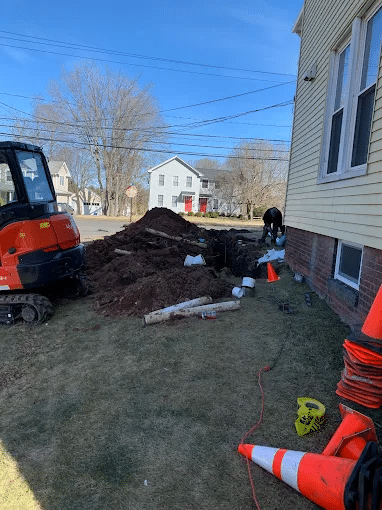
Your basement floor drain most likely backed up because your main drain line is clogged or damaged, and the floor drain is the lowest opening where the water can escape. The drain itself is rarely the problem.
Every drain in your house feeds the same main line. When that line cannot carry the flow, wastewater looks for the easiest way out, and that is almost always the basement floor drain. Here is what causes it, what to do right now, and how to stop it from happening again.
Why the Floor Drain Is the First Place to Back Up
Water follows the path of least resistance. The floor drain sits at the lowest point of your plumbing system, so any blockage downstream pushes water up through it before it reaches a sink or tub on a higher floor. That is why a backup in the basement is often a sign of a bigger problem in the main line or sewer connection.
Common Causes of a Floor Drain Backup
Tree roots in the main line
Roots grow toward moisture. If your sewer line has a tiny crack or a loose joint, roots can work their way in and form a mat that catches paper and waste. Older homes with clay or cast iron lines are the most likely to have this problem. Gurgling noises from drains and slow flushing are common early signs.
Buildup and aging pipes
Over time, grease, soap, scale, and rust coat the inside of the pipe and narrow it. Cast iron lines can corrode and become rough, so waste catches on the walls. A narrowed pipe cannot carry a full load, and the overflow comes up in the basement.
Items that do not belong in the drain
Wipes, paper towels, feminine products, and grease are common blockage starters. Even products labeled flushable can snag in a main line.
A broken or collapsed pipe
A crack, offset joint, or collapsed section can hold up waste and keep clogging, no matter how often it is cleared. This kind of problem calls for a repair, not a one-time cleaning.
Heavy rain and combined systems
In some towns, storm drainage and sewers share the same system. During very heavy rain the municipal line can fill up and push water back toward your home. Basements are the first to feel it. A failed or missing backwater valve can make that worse.
What to Do When the Drain Backs Up
- Stop using water. Do not run the washer, dishwasher, shower, or flush toilets until the line is cleared.
- Keep people and pets away from the water. A backup can contain sewage and bacteria.
- Stay away from electrical outlets, panels, and appliances that sit in the water.
- Skip the chemical drain cleaners. They rarely work on a main line problem, and they are harsh on pipes and hazardous to handle.
- Call a licensed plumber. A backup that keeps returning, or any sewage, deserves prompt attention. Our 24 hour emergency plumber service is available any time of day.
How a Plumber Finds and Fixes the Problem
The first step is finding out what is actually wrong. A sewer camera inspection lets us see inside the pipe, locate roots, buildup, or a break. After that, the fix depends on the cause:
- Hydro jetting uses high-pressure water to scour grease, scale, and roots from the pipe walls. It cleans the whole pipe, not just a hole through the clog.
- Cable machine or auger cleaning can clear a root blockage quickly, though it may leave more on the pipe walls than jetting does.
- Sewer line repair or replacement addresses breaks, bellies, and collapsed sections. Depending on the situation, that may be done by digging or with trenchless methods.
Routine drain cleaning can prevent many of these problems, and a camera check every so often helps catch trouble early.
Other Basement Plumbing Problems to Watch
A basement floor drain backup is not the only thing that goes wrong down there. Many of the house’s pipes, the water heater, and often the washing machine are in the basement, so small problems can go unnoticed for a long time. Keep an eye out for:
- Damp spots, musty smells, or visible mold, which can signal a hidden leak
- Rust or water around the base of the water heater
- Hoses on the washing machine that are cracked, bulging, or leaking
- Standing water near a sump pump, or a pump that runs constantly
A yearly plumbing system inspection can catch these early. If you have a sump pump, make sure it works. See our sump pump repair and installation page for more.
How to Prevent Another Backup
- Only flush toilet paper and human waste.
- Keep grease and food scraps out of the kitchen drain.
- Plant trees away from the sewer line, and have the line checked if you have older pipes or large trees near the house.
- Schedule periodic drain cleaning or a camera inspection, especially if you have had a backup before.
- Keep the floor drain itself clear of debris, and make sure the trap holds water so sewer gas stays out.
Talk to A-Team Plumbing & HVAC
A-Team Plumbing & HVAC is a licensed Connecticut plumbing contractor (P-1 P1288989) based in North Branford, owned by Manny Galarza. We give upfront written pricing with no hidden fees and offer financing for larger repairs. If you are dealing with a backup, contact us and we will help you find the cause.
Frequently Asked Questions
Is a basement floor drain backup an emergency?
Yes, particularly if the water looks or smells like sewage. Stop using water in the house and call a plumber promptly.
Can I fix a floor drain backup myself?
A minor clog right at the drain may clear with a plunger, but most backups come from the main line. That needs professional equipment and often a camera to locate the problem.
Why does it back up when it rains?
Heavy rain can overload municipal sewers or saturate the ground around your lateral line, and the extra water pushes back into the lowest drain in your home.
Will my insurance cover it?
It depends on your policy. Many homeowner policies exclude sewer backup unless you have added coverage, so check with your insurer.
How do I know if tree roots are the cause?
Gurgling drains, slow flushing, and repeated backups in an older home are common clues. A camera inspection will confirm it.